
Dental Crowns
Strength and beauty for teeth that need it.
A crown protects a tooth that's too damaged for a filling. We recommend one only when a smaller restoration won't do the job.
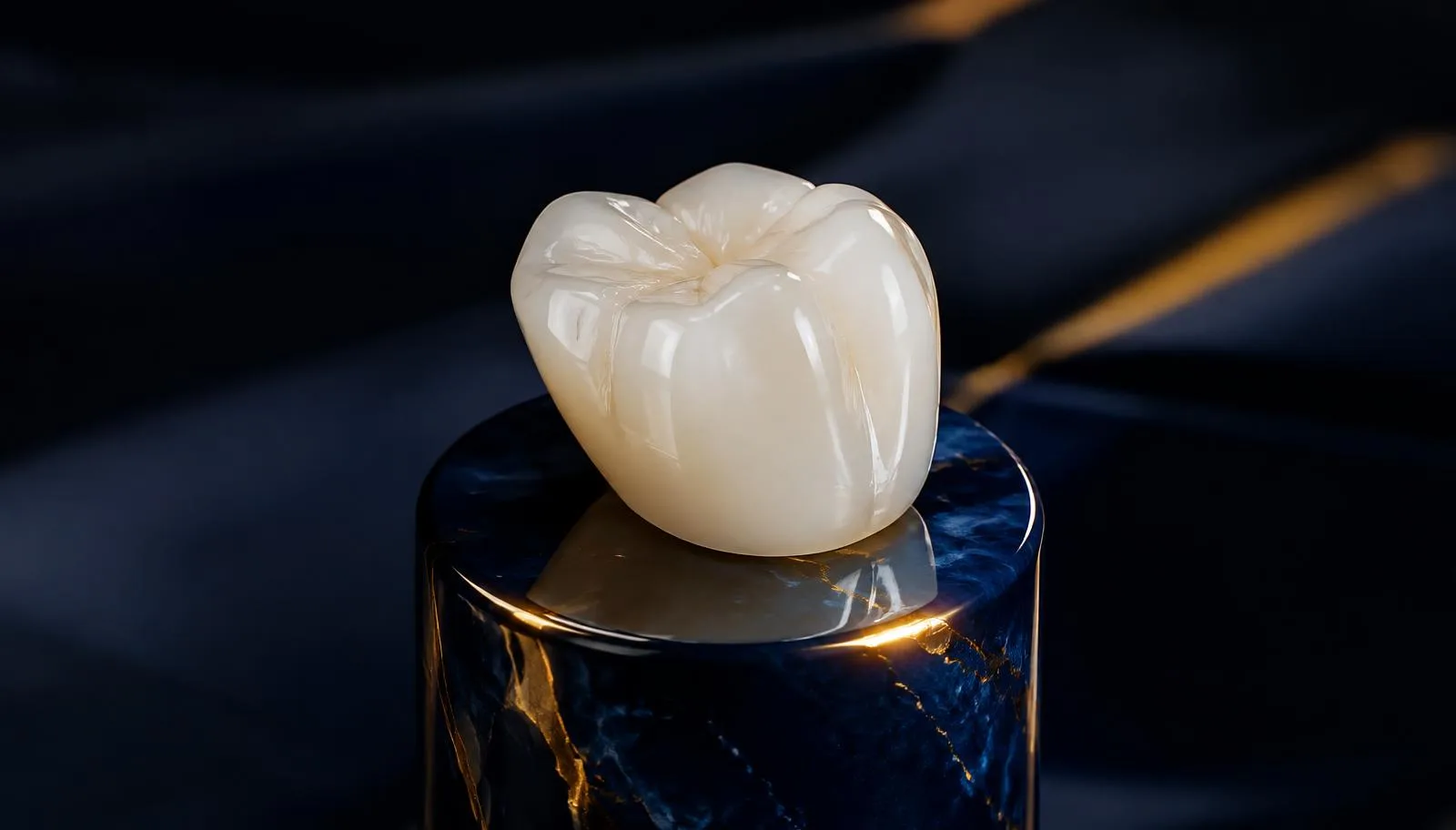
What is dental crown?
A crown is a custom cap that covers the entire visible part of a tooth. It restores strength, shape and appearance after large fillings, cracks or root canals. Crowns are made of zirconia, porcelain or gold. Their main limitation: the tooth must be reshaped on all sides, so we consider onlays first when possible.
Who is a candidate?
Often a good fit
- Cracked teeth
- Teeth with very large fillings
- Back teeth after a root canal
- Badly worn teeth
Needs extra care or planning
- Teeth that could be saved with an onlay
- Severe grinding
- Active gum disease
- Too little tooth structure
When an exam is needed: An exam and X-rays determine whether a crown or a smaller onlay is best.
Problems it can address
Limitations: A crown doesn't prevent decay at its edges or gum disease; home care still matters.
Benefits and disadvantages
Benefits
- Strong, long-lasting protection
- Natural appearance
- Prevents fractures
- Restores chewing
Disadvantages
- Removes more tooth than an onlay
- Higher cost
- Possible sensitivity
- May need replacement eventually
The treatment process
- 1
Exam
X-rays and a review of onlay vs crown.
- 2
Preparation
The tooth is shaped under numbing.
- 3
Digital scan
An iTero scan replaces messy impressions.
- 4
Temporary
A temporary crown protects the tooth.
- 5
Placement
The final crown is bonded and adjusted.
Timeline: Two visits about 2 weeks apart.
Recovery and aftercare
What to expect
Discomfort: Mild sensitivity and gum soreness for a few days.
Downtime: None.
Aftercare
- Avoid sticky foods on the temporary
- Brush and floss normally
- Wear a nightguard if you grind
- Keep checkups
Call us right away if you notice
- Temporary falls off
- Bite feels high
- Lingering pain
- Swelling
Longevity and outcomes
Crowns commonly last 10–15+ years.
What affects your result
- Material
- Grinding
- Home care
- Bite
Possible complications
- Decay at margins
- Fracture
- Nerve sensitivity
- Gum recession
Cost and payment options
Priced per tooth and by material. You'll get a written quote and insurance estimate before treatment.
What affects the price
- Material
- Build-up needed
- Root canal
- Insurance
Insurance & financing
We accept most PPO plans and offer financing through CareCredit, Sunbit and others.
Comparison with alternatives
Onlay
Covers only the damaged part.
Large filling
For moderate damage.
Extraction and implant
If the tooth can't be saved.
Clinical case examples
Real, patient-authorized cases for this treatment are being added soon, with diagnosis, reasoning and results.
View our Before & After Gallery →Why choose Neo Dental?
Patient reviews
Read what our patients say, in their own words, on independent review sites.
Frequently asked questions
Does getting a crown hurt?+
No, the tooth is numbed.
How long does a crown last?+
Often 10–15 years or more.
What material is best?+
Zirconia for strength, porcelain for front teeth.
Can a crown get a cavity?+
The tooth under it can, at the edges.
Will it look natural?+
Yes, it's shade-matched.
Do I need a crown after a root canal?+
For back teeth, usually yes.
Your care team & booking
Dr. Sol Shahri
General and cosmetic dentist leading every treatment plan at Neo Dental. This page was medically reviewed by Dr. Sol Shahri.
Meet the team →Related treatments
Not sure if you need dental crowns?
Book an exam and we'll explain every option, including the most conservative one.
Book your visit