
Root Canals
The treatment that saves your natural tooth.
A root canal removes the infection and keeps your own tooth. Modern techniques make it feel much like getting a filling, and it usually stops the pain right away.
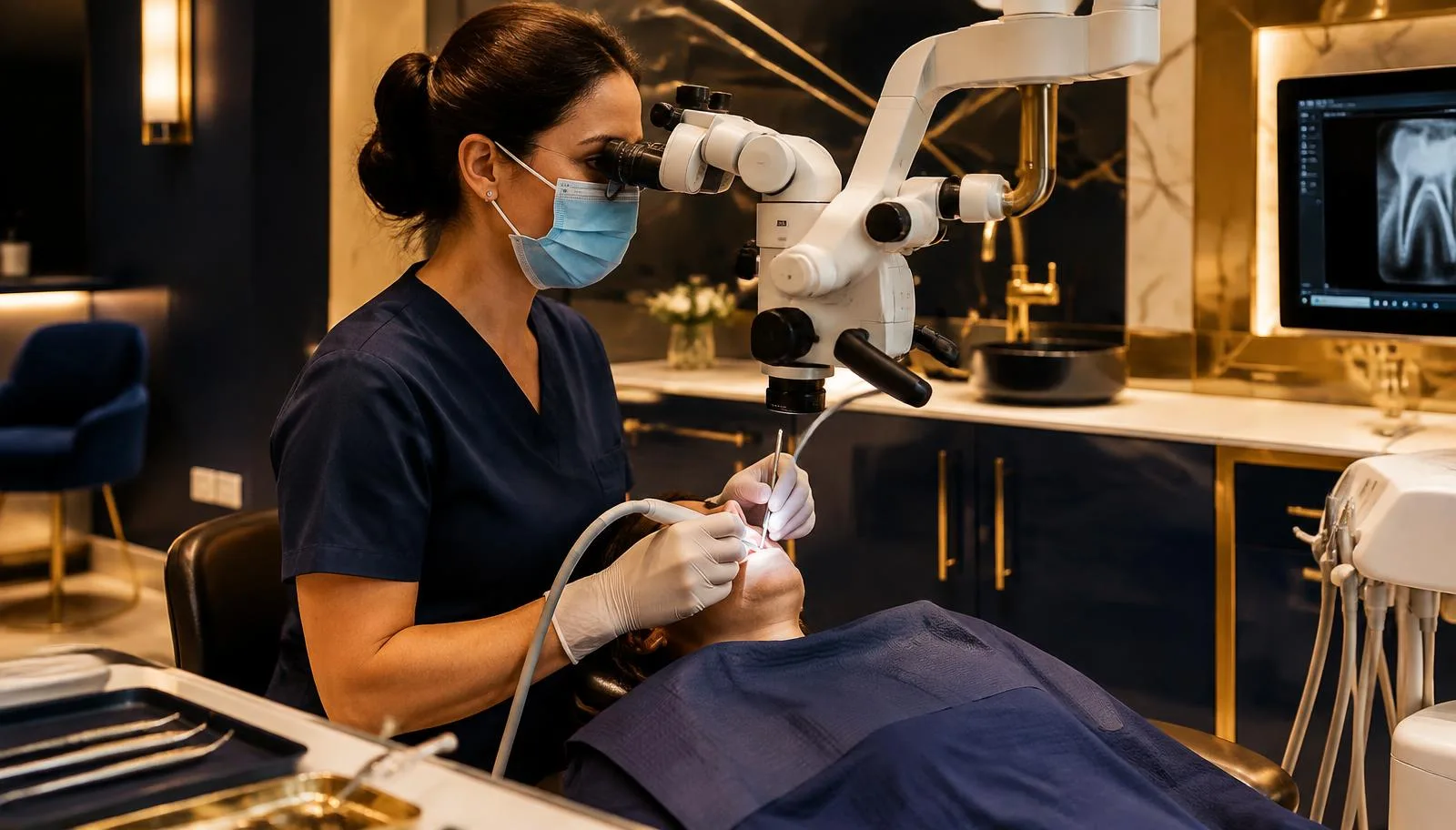
What is root canal?
A root canal treats the soft inside of a tooth (the pulp) when it becomes infected or badly inflamed from deep decay, a crack or an injury. The infected pulp is removed, the canals are cleaned and sealed, and the tooth is usually protected with a crown. It relieves pain and lets you keep your natural tooth. Its main limitation: a tooth that is cracked into the root or has too little structure left may not be saveable.
Who is a candidate?
Often a good fit
- Lingering sensitivity to hot or cold
- Severe toothache, especially when biting
- An abscess or gum pimple near a tooth
- A tooth darkened after an injury
- Deep decay that has reached the nerve
Needs extra care or planning
- Teeth cracked deep into the root
- Very curved or calcified canals (may be referred to an endodontist)
- Too little tooth left to support a crown
- Advanced gum disease around the tooth
When an exam is needed: An exam, X-rays and sensitivity tests confirm whether the nerve is infected and whether the tooth can be saved.
Problems it can address
Limitations: A root canal treats the inside of the tooth. It doesn't fix a crack into the root or bone loss from gum disease, and the tooth usually needs a crown afterward.
Benefits and disadvantages
Benefits
- Keeps your natural tooth and bite
- Usually relieves pain quickly
- Often less expensive long term than extraction plus an implant
- High success rate when followed by a good crown
Disadvantages
- The tooth usually needs a crown, adding cost and a second visit
- The tooth can become more brittle over time
- A small number need retreatment or later extraction
- Complex cases may need a specialist
The treatment process
- 1
Diagnosis
X-rays and tests to confirm the nerve is infected and the tooth is restorable.
- 2
Numbing
A warmed local anesthetic; nitrous oxide is available for anxious patients.
- 3
Cleaning the canals
A small opening lets us remove the infected pulp and disinfect the canals under isolation.
- 4
Sealing
The canals are filled and sealed, and a temporary or permanent filling is placed.
- 5
Crown
Back teeth are usually protected with a crown a few weeks later.
Timeline: One or two visits of 60–90 minutes, followed by a crown appointment.
Recovery and aftercare
What to expect
Discomfort: Tenderness when biting for 2–4 days is normal and usually eased by over-the-counter pain relief.
Downtime: Most people go straight back to work.
Aftercare
- Avoid chewing hard food on the tooth until the crown is placed
- Brush and floss normally
- Take any prescribed medicine as directed
- Keep your crown appointment
Call us right away if you notice
- Swelling inside or outside the mouth
- Severe pain lasting more than a few days
- A temporary filling that falls out
- An uneven bite
Longevity and outcomes
Most root-canal-treated teeth with a good crown last many years, often a lifetime.
What affects your result
- Getting a crown promptly
- Quality of the seal
- Grinding and clenching
- Home care and checkups
Possible complications
- Reinfection
- Root fracture
- Missed or hidden canals
- Decay under the crown
Cost and payment options
Cost varies by tooth: front teeth have one canal, molars have three or more. We give you an exact written quote, including the crown, before treatment.
What affects the price
- Front tooth, premolar or molar
- Retreatment of a previous root canal
- Crown or build-up needed
- Insurance coverage and financing
Insurance & financing
We accept most PPO plans and offer financing through CareCredit, Sunbit and others.
Comparison with alternatives
Extraction
Removes the tooth; usually followed by an implant or bridge.
Pulp capping
For very early cases, protecting the nerve can sometimes avoid a root canal.
Retreatment or surgery
For previously treated teeth, redoing the canal or an apicoectomy (specialist).
No treatment
Not recommended: the infection can spread and cause bone loss or swelling.
Clinical case examples
Real, patient-authorized cases for this treatment are being added soon, with diagnosis, reasoning and results.
View our Before & After Gallery →Why choose Neo Dental?
Patient reviews
Read what our patients say, in their own words, on independent review sites.
Frequently asked questions
Do root canals hurt?+
Most patients say it feels like a filling. The treatment relieves the pain caused by the infection.
How many visits?+
Usually one or two, then a crown visit.
Do I need a crown?+
For back teeth, almost always. It protects the tooth from cracking.
Is it better to just pull the tooth?+
Keeping your natural tooth is usually best for your bite and bone. We'll go over both options honestly.
Can I drive after?+
Yes, with local anesthetic. Nitrous oxide wears off within minutes.
How long does a root canal last?+
With a good crown and care, often for many years or a lifetime.
Will I need antibiotics?+
Not usually. They're only needed for spreading infection or swelling.
Your care team & booking
Dr. Sol Shahri
General and cosmetic dentist leading every treatment plan at Neo Dental. This page was medically reviewed by Dr. Sol Shahri.
Meet the team →References
Related treatments
Not sure if you need root canals?
Book an exam and we'll explain every option, including the most conservative one.
Book your visit