
Porcelain Veneers
Porcelain that catches light like real enamel.
Veneers can change the color, shape and length of your front teeth in a few visits, with a result that resists stains for years.
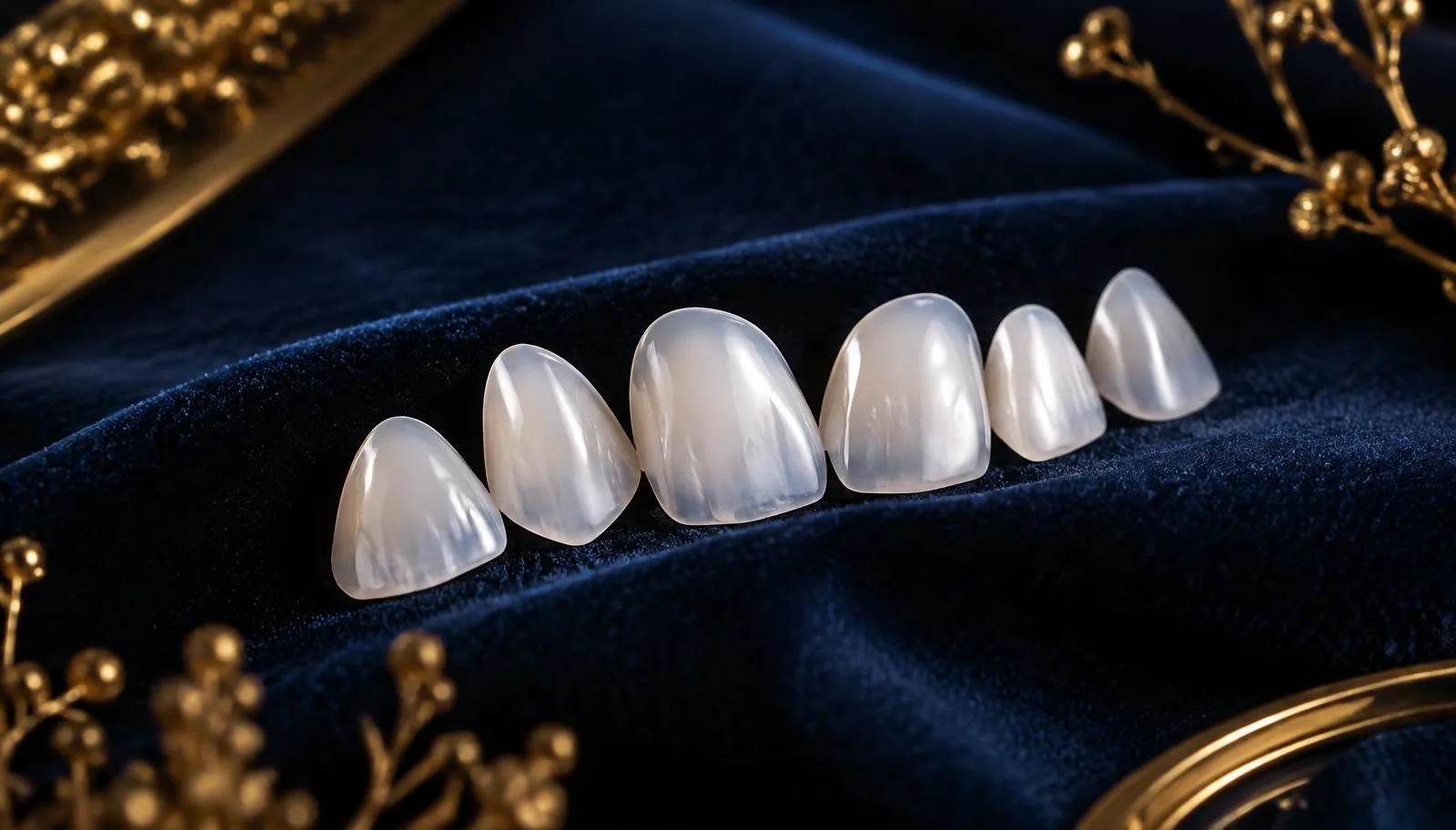
What is porcelain veneer?
A porcelain veneer is a thin shell of ceramic bonded to the front of a tooth. It changes color, shape, size and minor alignment. Traditional veneers usually need a thin layer of enamel removed so they don't look bulky. Their main limitation: that enamel reduction is permanent, so veneers are a long-term commitment.
Who is a candidate?
Often a good fit
- Deep stains that whitening can't remove
- Worn, chipped or uneven front teeth
- Small gaps or slightly crooked teeth
- Teeth that look too short
Needs extra care or planning
- Heavy grinding without a nightguard
- Active gum disease or decay
- Very thin or little remaining enamel
- Significant crowding (aligners may be better first)
When an exam is needed: An exam, photos, a digital scan and a bite analysis are needed to make sure veneers will look natural and stay put.
Problems it can address
Limitations: Veneers don't straighten severely crooked teeth or fix bite problems, and a cracked veneer must be replaced, not patched invisibly.
Benefits and disadvantages
Benefits
- Very natural, light-reflecting look
- Highly stain-resistant
- Can transform a smile in 2–3 visits
- Long-lasting with good care
Disadvantages
- Usually requires removing some enamel
- Not reversible
- Higher cost than bonding
- Can chip with grinding or biting hard objects
The treatment process
- 1
Design visit
Photos, scans and a smile simulation to plan shape and shade.
- 2
Mockup
A trial version lets you approve the look before any changes.
- 3
Preparation
A thin layer of enamel is gently removed under numbing, and temporaries are placed.
- 4
Bonding
Your custom veneers are tried in, adjusted and permanently bonded.
- 5
Protection
A bite check and, often, a nightguard.
Timeline: Usually 2–3 visits over 2–4 weeks.
Recovery and aftercare
What to expect
Discomfort: Mild gum tenderness and temporary sensitivity for a few days.
Downtime: None; most people return to work the same day.
Aftercare
- Brush and floss normally
- Avoid biting nails, ice or pens
- Wear your nightguard
- Keep regular cleanings
Call us right away if you notice
- A veneer feels loose
- A chip or crack
- Your bite feels high
- Gum swelling around a veneer
Longevity and outcomes
Porcelain veneers commonly last 10–20 years with good care.
What affects your result
- Grinding and nightguard use
- Gum health
- Bite forces
- Habits like chewing ice
Possible complications
- Chipping or fracture
- Debonding
- Gum recession showing the edge
- Decay at the margin
Cost and payment options
Veneers are priced per tooth. You'll receive an exact written quote after your design visit.
What affects the price
- Number of veneers
- Porcelain type and lab
- Need for whitening or gum contouring
- Financing options
Insurance & financing
We accept most PPO plans and offer financing through CareCredit, Sunbit and others.
Comparison with alternatives
No-prep or minimal-prep veneers
Little or no enamel removal for suitable cases.
Composite bonding
Lower cost, no drilling, but stains and chips sooner.
Whitening
For color-only concerns.
Invisalign
For alignment-driven concerns.
Clinical case examples
Real, patient-authorized cases for this treatment are being added soon, with diagnosis, reasoning and results.
View our Before & After Gallery →Why choose Neo Dental?
Patient reviews
Read what our patients say, in their own words, on independent review sites.
Frequently asked questions
Do veneers look fake?+
Not when designed well. We match shape and translucency to your face and other teeth.
Do veneers hurt?+
Preparation is done with numbing; most people feel only mild sensitivity afterward.
How many veneers do I need?+
Often 6–10 for the visible smile, but sometimes just one or two.
Can veneers be whitened?+
No. Whiten your natural teeth first so the shade can be matched.
Are veneers permanent?+
The enamel change is permanent, so you'll always need a veneer or similar covering.
How long do they last?+
Often 10–20 years.
Can I eat normally?+
Yes, but avoid biting very hard objects.
Your care team & booking
Dr. Sol Shahri
General and cosmetic dentist leading every treatment plan at Neo Dental. This page was medically reviewed by Dr. Sol Shahri.
Meet the team →Related treatments
Not sure if you need porcelain veneers?
Book an exam and we'll explain every option, including the most conservative one.
Book your visit