
Wisdom Teeth Extractions
Wisdom teeth, handled wisely: only when there's a real reason.
Not every wisdom tooth needs to come out. We look at your X-rays, explain the real risks of keeping or removing them, and make the visit as comfortable as possible.
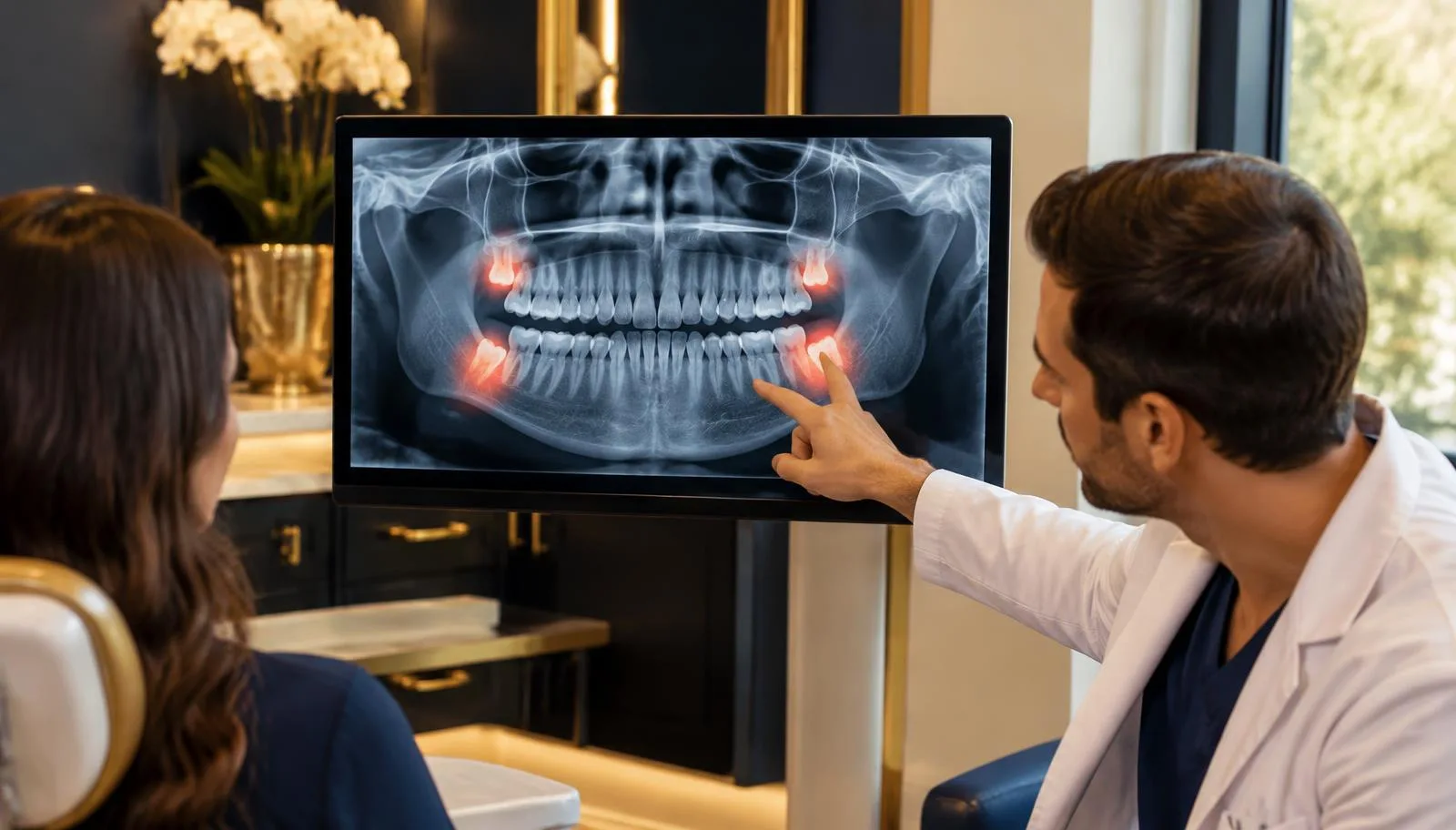
What is wisdom teeth extraction?
Wisdom teeth are the third molars that usually arrive between ages 17 and 25. Removal is recommended when they are impacted (stuck under the gum or bone), coming in crooked, causing infection, damaging the tooth in front, or impossible to keep clean. Healthy, fully erupted and cleanable wisdom teeth can often stay. The main limitation is that removal is minor surgery with a few days of swelling.
Who is a candidate?
Often a good fit
- Teens and young adults with impacted or partly erupted wisdom teeth
- Repeated gum infections around a wisdom tooth (pericoronitis)
- Decay or damage on the wisdom tooth or the molar in front
- Cysts or bone changes seen on X-ray
Needs extra care or planning
- Roots very close to the jaw nerve (may need a 3D scan or a specialist)
- Older adults with deeply buried, symptom-free teeth
- Blood thinners or certain bone medications
- Pregnancy (non-urgent removal is usually postponed)
When an exam is needed: A panoramic X-ray, and sometimes a 3D scan, is needed to see the roots, the nerve and the angle of each tooth before deciding.
Problems it can address
Limitations: Removing wisdom teeth will not straighten crowded front teeth, and it doesn't prevent all future jaw or bite problems.
Benefits and disadvantages
Benefits
- Ends recurring infections and back-of-mouth pain
- Protects the healthy molars in front
- Easier and faster healing at a younger age
- All four can often be done in one visit
Disadvantages
- Several days of swelling and soreness
- Small risk of dry socket or infection
- Rare risk of temporary or lasting numbness in the lip or tongue
- May require referral to an oral surgeon for complex cases
The treatment process
- 1
Consultation & imaging
We take a panoramic or 3D image and explain whether each tooth should stay or go.
- 2
Comfort planning
Local anesthetic with nitrous oxide; complex cases can be referred for IV sedation.
- 3
Removal
Erupted teeth are lifted out; impacted teeth may need a small opening and sectioning.
- 4
Closure
Dissolvable stitches may be placed, and you'll bite on gauze.
- 5
Follow-up
A check-in call the next day and a follow-up visit if needed.
Timeline: Usually 45–90 minutes for all four. Most swelling peaks on day 2–3 and fades within a week.
Recovery and aftercare
What to expect
Discomfort: Moderate soreness and swelling for 3–5 days; we'll recommend a pain-relief plan.
Downtime: Plan 2–3 days of rest. Most people return to school or work within a few days.
Aftercare
- Ice packs on the cheeks for the first 24–36 hours
- Soft, cool foods; no straws or smoking for at least 72 hours
- Sleep with your head raised the first night
- Gentle salt-water rinses from day two
Call us right away if you notice
- Pain that worsens after day three
- Fever, pus or swelling that keeps increasing
- Numbness that hasn't faded after the anesthetic wears off
- Trouble swallowing or breathing (call 911)
Longevity and outcomes
Once removed, wisdom teeth can't come back or cause further problems in that spot.
What affects your result
- Age at removal
- How deeply impacted the teeth are
- Smoking
- Following aftercare
Possible complications
- Dry socket
- Infection
- Nerve irritation
- Sinus opening for upper teeth (rare)
Cost and payment options
Cost depends on how many teeth are removed and how impacted each one is. We provide an exact written quote after your X-rays.
What affects the price
- Erupted vs soft-tissue vs bony impaction
- Number of teeth
- Imaging (panoramic or 3D)
- Sedation and insurance coverage
Insurance & financing
We accept most PPO plans and offer financing through CareCredit, Sunbit and others.
Comparison with alternatives
Active monitoring
Healthy, symptom-free teeth can be watched with X-rays every 1–2 years.
Removing only the problem tooth
Not every case needs all four out.
Gum flap treatment
Minor infections can sometimes be managed by cleaning and removing the gum flap.
Coronectomy
For roots touching the nerve, the crown is removed and the roots left in place (specialist procedure).
Clinical case examples
Real, patient-authorized cases for this treatment are being added soon, with diagnosis, reasoning and results.
View our Before & After Gallery →Why choose Neo Dental?
Patient reviews
Read what our patients say, in their own words, on independent review sites.
Frequently asked questions
Do all wisdom teeth need to be removed?+
No. Healthy, fully erupted teeth you can clean well can often stay. We'll show you on your X-ray.
What's the best age for removal?+
Late teens to early twenties, when roots aren't fully formed and healing is faster.
Will I be asleep?+
Most of our patients are comfortable with local anesthetic and nitrous oxide. For deeper sedation we refer to a trusted oral surgeon.
How long is the swelling?+
It usually peaks on day 2–3 and is mostly gone within a week.
What can I eat after?+
Yogurt, smoothies (with a spoon), mashed potatoes, eggs and soup that isn't hot.
Can impacted wisdom teeth cause crowding?+
The evidence is mixed. Crowding has many causes, so removal isn't done just for that.
When can I exercise?+
Wait about 3–5 days before hard exercise.
Are stitches removed?+
We usually use dissolvable stitches that disappear within 1–2 weeks.
Your care team & booking
Dr. Sol Shahri
General and cosmetic dentist leading every treatment plan at Neo Dental. This page was medically reviewed by Dr. Sol Shahri.
Meet the team →Related treatments
Not sure if you need wisdom teeth extractions?
Book an exam and we'll explain every option, including the most conservative one.
Book your visit